
Wine storage: stable temperature, humidity and darkness
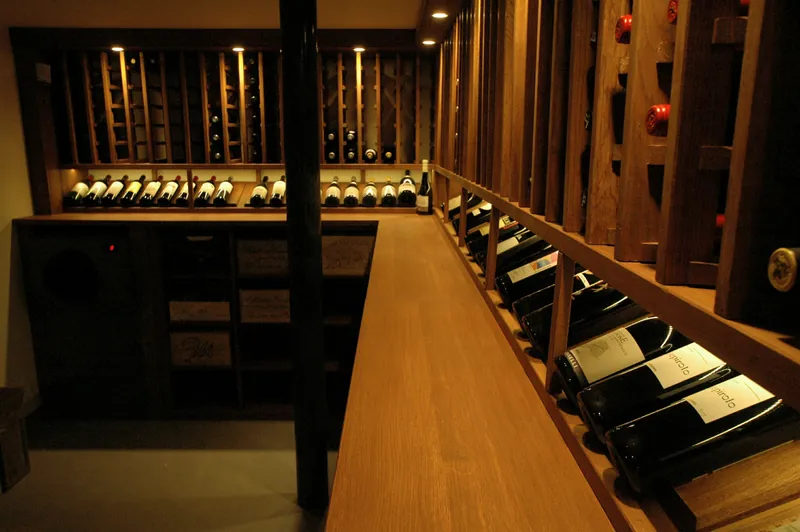
For long-term wine storage, we recommend a stable temperature of approximately 12–14 °C and relative humidity of around 70%, in darkness and free from vibration. Wine is harmed most by temperature fluctuations, heat and light – so good storage addresses the stability of the whole space, from insulation to lighting.
01
Conditions for long-term storage
| Parameter | Recommendation | Why |
|---|---|---|
| Temperature | a stable approx. 12–14 °C (10–15 °C is generally cited) | heat accelerates ageing; Wine Master cooling units are factory-set to 12 °C |
| Temperature stability | the smallest possible seasonal and daily fluctuations | fluctuations do more harm than whether the cellar is at 12 or 14 °C |
| Relative humidity | around 70% | protects the cork from drying out; excessive humidity encourages mould on labels and corks |
| Light | darkness; UV-free LED lighting only when someone is present | UV and intense light damage wine, most of all in clear and light-coloured bottles |
| Bottle position | cork-sealed bottles stored lying down | the cork stays in contact with the wine |
| Stillness | vibration-free racks, away from sources of vibration | the effect of vibration is little researched, but it is sensible to avoid it as a precaution |
Wine Master states that wine tolerates a wide range of relative humidity (approximately 40–100%) without damage; around 70% is the ideal compromise between protecting corks and labels.
02
Air temperature is not wine temperature
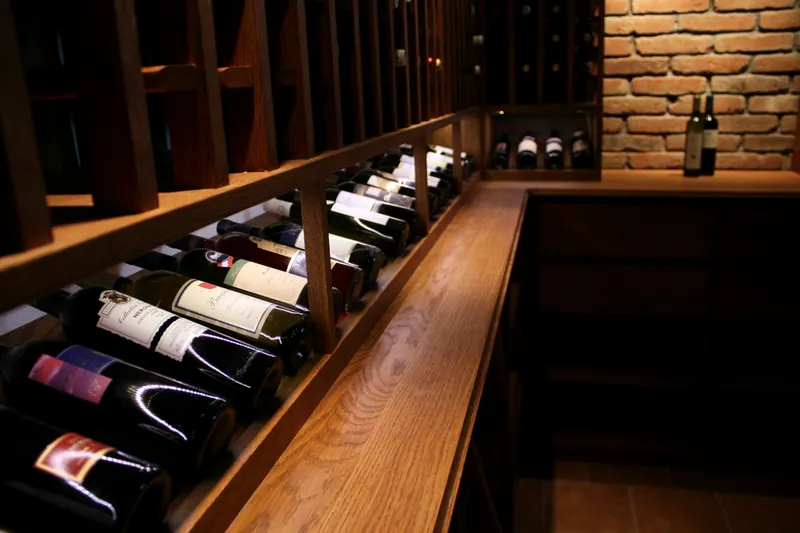
The thermostat measures air temperature. Wine in bottles responds to changes slowly, because liquid has a high thermal inertia. Short air fluctuations of ±1 °C, within which the cooling unit’s thermostat operates, therefore have practically no effect on the temperature of the wine.
What does harm is long and repeated change: the difference between summer and winter in an unheated cellar, a glazed wall warmed by the sun, or a cellar next to a boiler room. Fluctuations like these genuinely warm the wine and cool it again – and that is the worst thing for long ageing.
03
A passive cellar or a climate-controlled space?
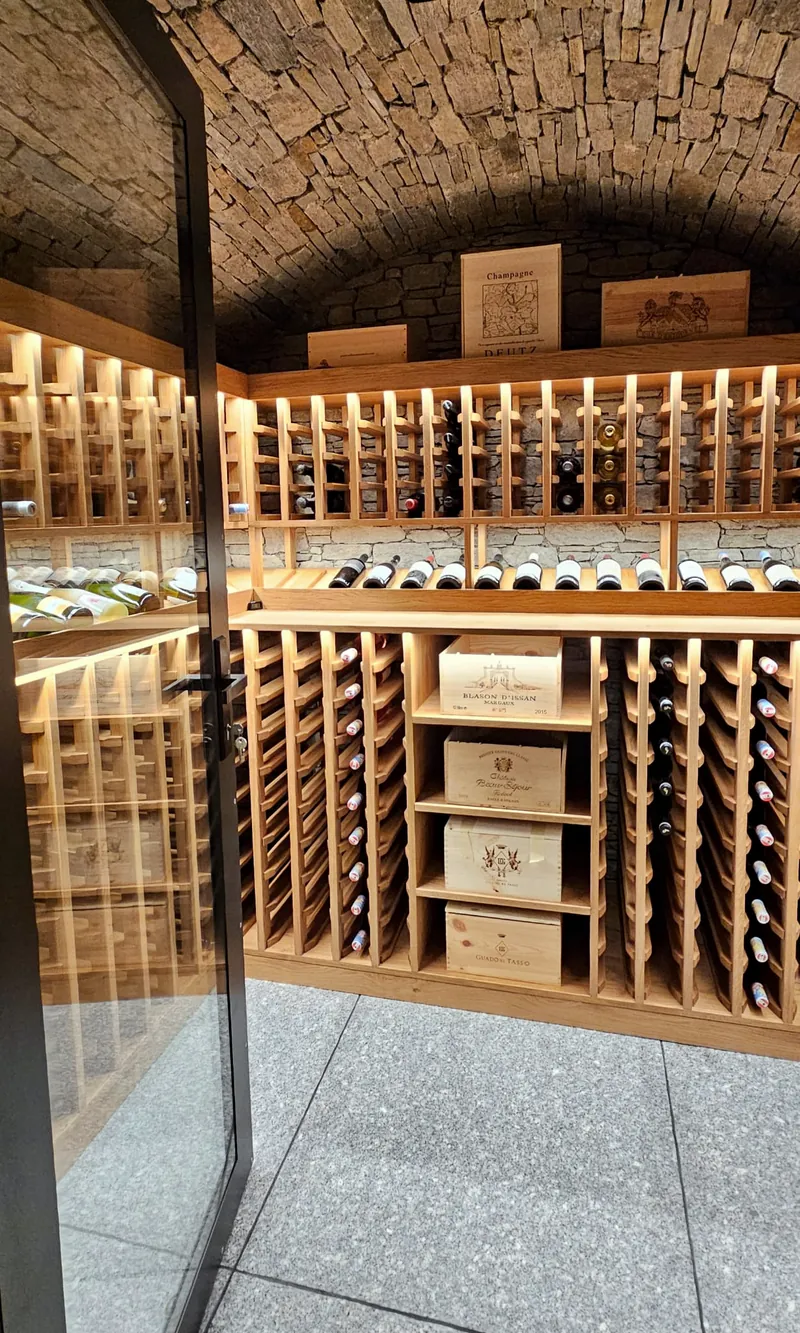
A traditional underground cellar can work, provided its temperature stays within a narrow range all year round. Before you store your collection there, measure temperature and humidity over at least a summer and a winter. If it rises above 18 °C in summer or varies by several degrees, an active – that is, insulated and climate-controlled – space is more suitable.
An active wine cellar holds the chosen temperature regardless of the season and of where it is in the house. We describe how we design one on our Bespoke wine cellars page.
04
Storage or display?
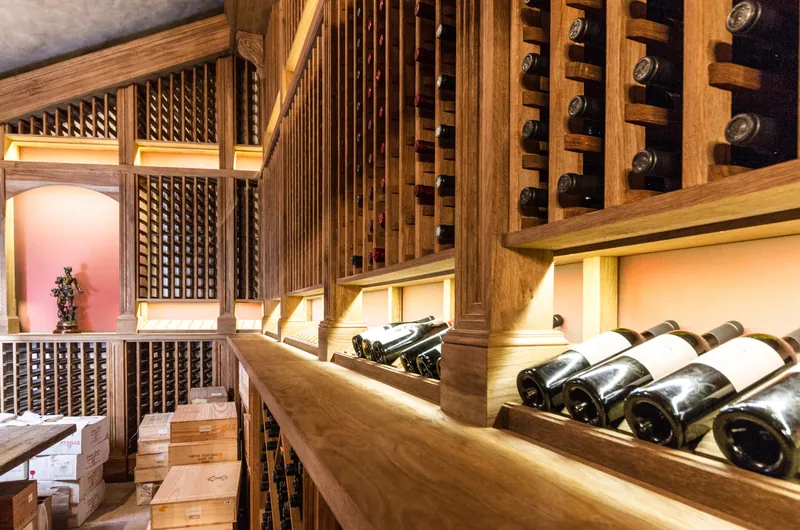
Storage needs stability, darkness and capacity. A display area needs visibility, light and quick access to bottles. Most projects combine both: wines for drinking close at hand, cellaring vintages in a quiet, dark section. The decision affects racking, lighting and glazing – more on our Wine cellar fit-out page.
Technology
Section through an active cellar.
Stable conditions come from the combination of insulation, cooling capacity and airflow between the racks.
- 01The room’s insulated envelope
- 02Cooling sized to the volume
- 03Air circulation
- 04Racking system
- 05Glazing with steel frames
- 06Condensate drain
05 / Related
Continue
06 / Questions
Frequently asked questions
What is the ideal temperature for storing wine?
For long-term storage, a stable 12–14 °C is usually recommended. More important than the exact figure is that the temperature does not change over the course of the year.
Can I store red and white wines at the same temperature?
Yes. For long-term storage, the same stable temperature suits all wines. Serving temperatures differ – the wine is brought to these before serving.
What humidity does a wine cellar need?
Relative humidity of around 70% is ideal. Wine tolerates a wider range, but in dry air the cork can dry out, and in very humid air mould forms on labels.
Does a wine cellar have to be underground?
No. A climate-controlled, well-insulated cellar can be in a basement, on the ground floor or on an upper floor. What matters is insulation, heat gains and the ability to dissipate heat from the cooling unit.
Enquiry
Send us a photograph of your space.
A short description, dimensions or a floor plan is enough for an initial assessment. We usually reply within one working day.