
Glazed wine walls
Glazing opens the collection up to the interior, but it is the weakest point of the thermal envelope. To keep the glass from misting and the cooling unit holding temperature, the glazing, frames and cooling must be designed together.

01
Why glass is technically demanding
Even high-quality insulating double glazing lets through several times more heat than an insulated wall. Every metre of glass therefore increases the capacity the cooling unit has to deliver. Glass also lets in light, including sunlight, and moisture can condense on it on the living-room side.
02
Condensation on glass: when it forms and how to prevent it
Moisture condenses on a surface whose temperature falls below the dew point of the surrounding air. At 22 °C and 50% relative humidity in a living room, the dew point is approximately 11 °C; at 60% it is already around 14 °C – above the cellar temperature. Single glazing or poor double glazing is cooled from the inside to the point where water condenses on it on the living-room side. The edges of the glass and the frames are the most sensitive.
- glazing with a low thermal transmittance Ug (insulating double or triple glazing)
- warm-edge spacers and thermally broken frames
- airtight doors and joints, so humid air does not enter the cellar
- airflow along the glass – the cooling unit outlet should not point into a corner or directly at the bottles
- sensible humidity in the living room; humidifiers increase the risk
The exact glazing specification and condensation risk assessment are always designed by the glazing supplier for the specific conditions.
03
Cooling unit manufacturer’s requirements
For Wine Master SP40 split units, the manufacturer’s manual states that glazing should have a Ug of no more than 1.0 W/m²K and that the glazed area must not exceed 50% of the total wall area of the cooled space. A larger proportion of glass requires an individual heat gain calculation and more powerful cooling. We compare unit types on our Wine cellar cooling page.
04
Glass, frames and light
We use insulating glass with UV protection, and safety glass where household use requires it. Doors are sealed around their entire perimeter. We choose UV-free LED lighting so it does not warm the bottles or damage the wine or labels. We coordinate the choice of glass, frame and backlighting with the floor and furniture in the room.
05 / Photographs
From AVS projects
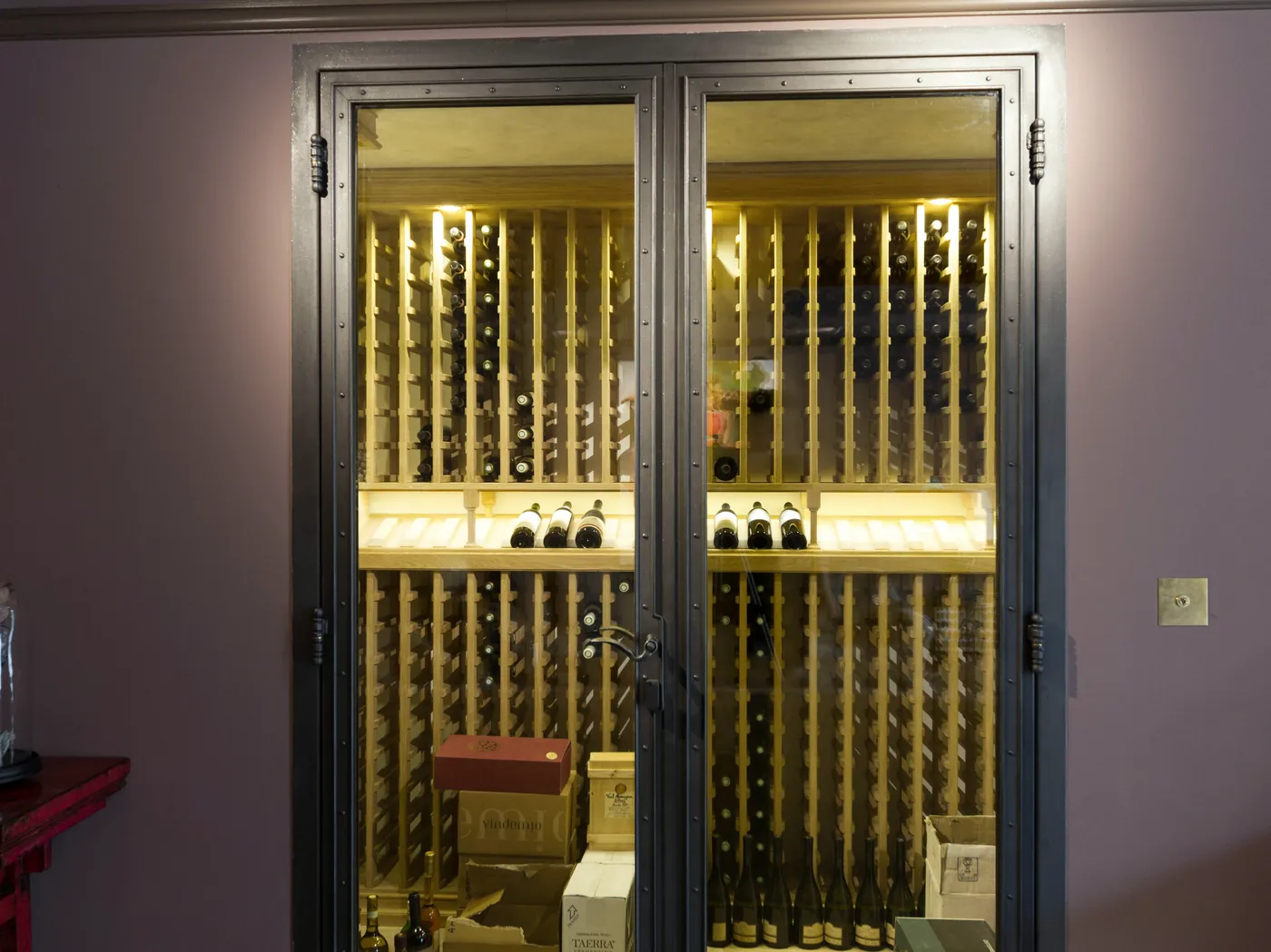

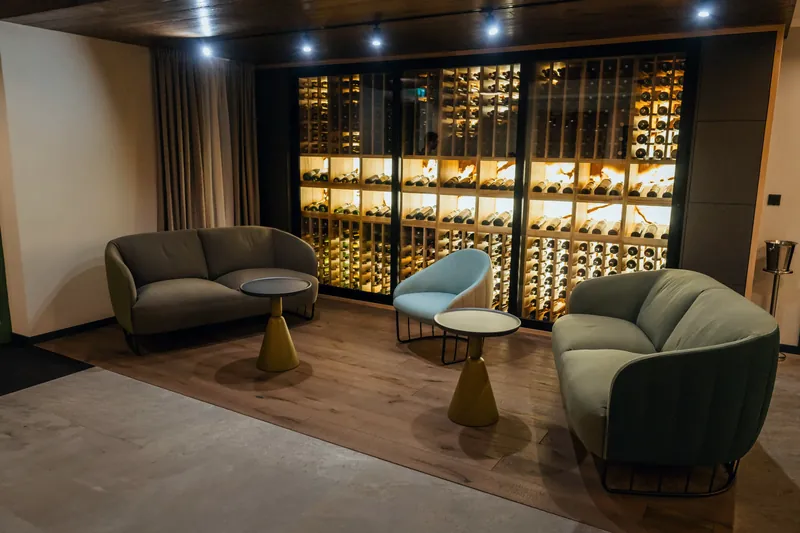
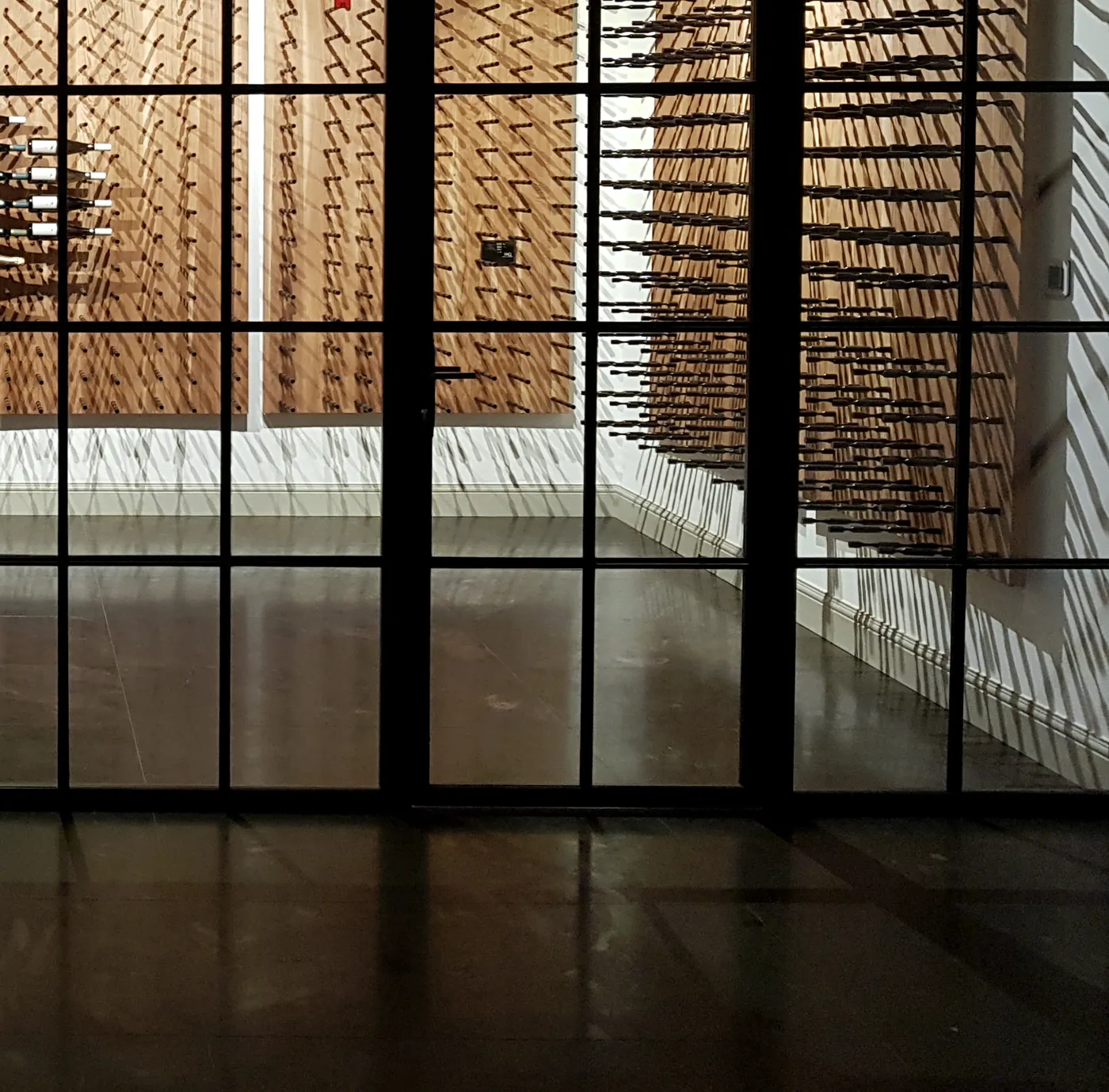
06 / EuroCave projects
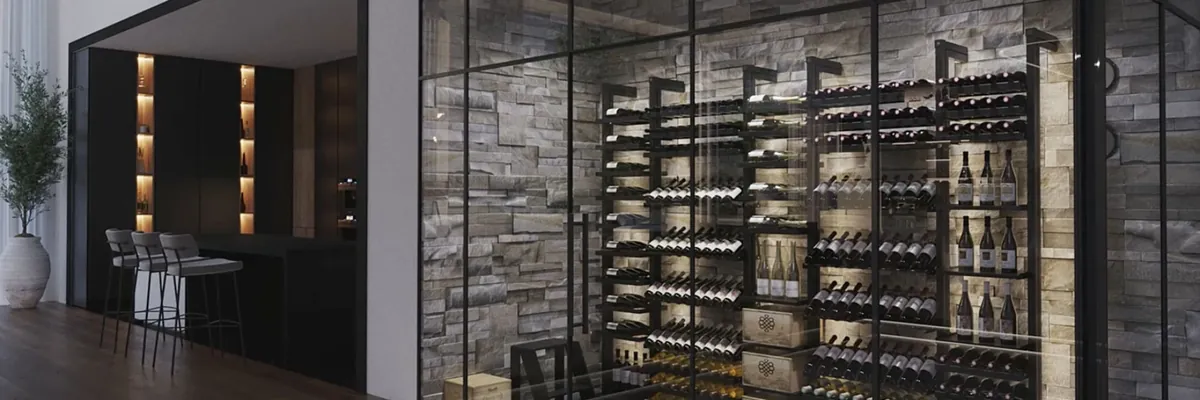
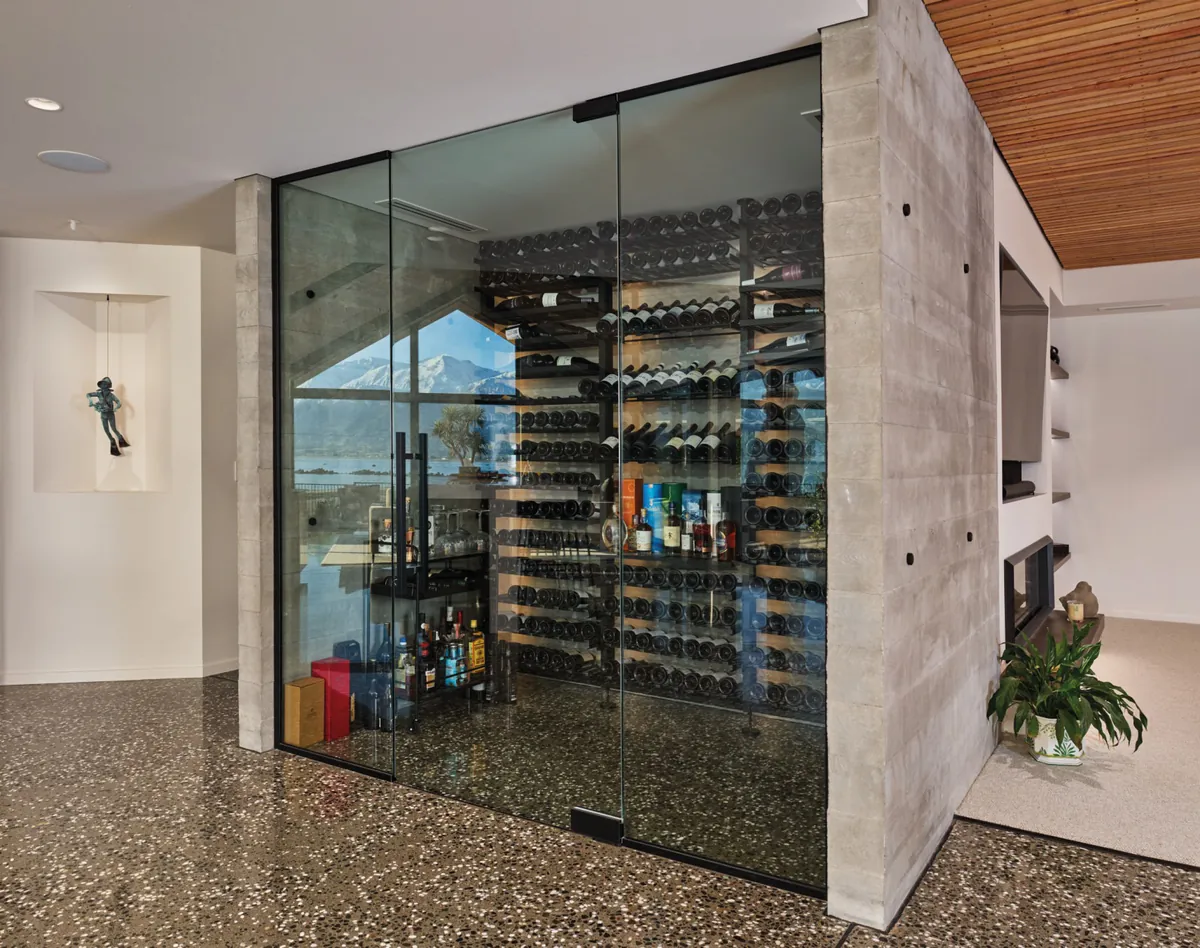
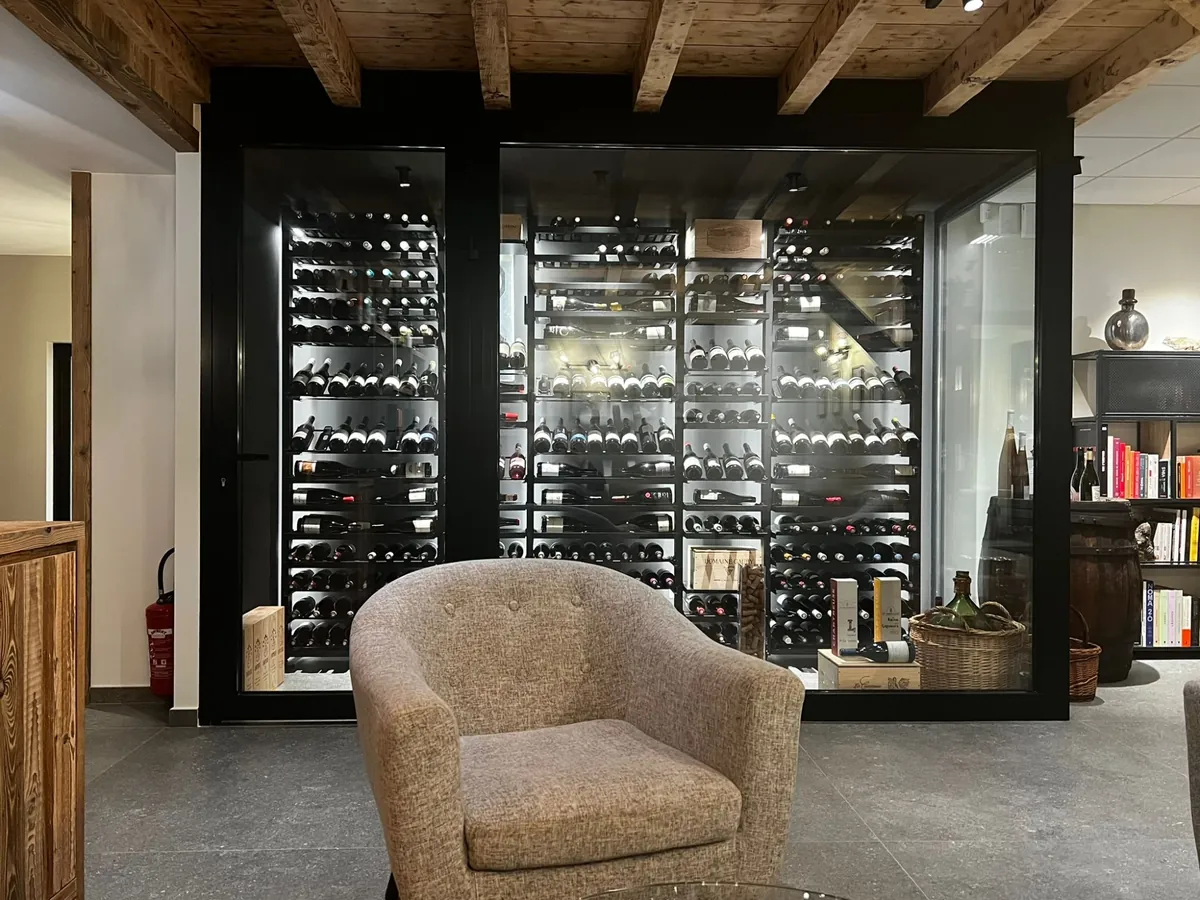
Glazed wine rooms
Projects by EuroCave and its partners abroad – examples of what the systems can do; these are not AVS projects.
07 / Related
Continue
08 / Questions
Frequently asked questions
Why does the glass on a wine wall mist up?
The surface of the glass on the living-room side is colder than the dew point of the room air. Higher-quality glazing with a lower Ug, warm frames and spacers, airtightness and correct airflow all help.
What glass should be used?
Insulating double or triple glazing with a Ug of no more than 1.0 W/m²K, with UV protection and, depending on location, safety glass. We set the exact specification at the design stage according to the conditions in the room.
Can the whole cellar be glazed?
The manufacturer of SP40 cooling units assumes glazing on no more than half the wall area. More glass is possible only with an individual calculation and corresponding cooling.
Can glazing be combined with timber cladding?
Yes. We detail material transitions and expansion joints so that no condensation forms in the frames and joints.
Enquiry
Send us a photograph of your space.
A short description, dimensions or a floor plan is enough for an initial assessment. We usually reply within one working day.