
Wine cellar technology
An active wine cellar maintains a stable climate through the interplay of several layers: an insulated envelope, a cooling unit with a route for heat dissipation, condensate drainage, airflow between the racks and lighting that does not warm the wine. This page gives an overview; each topic has its own detailed guide.
01
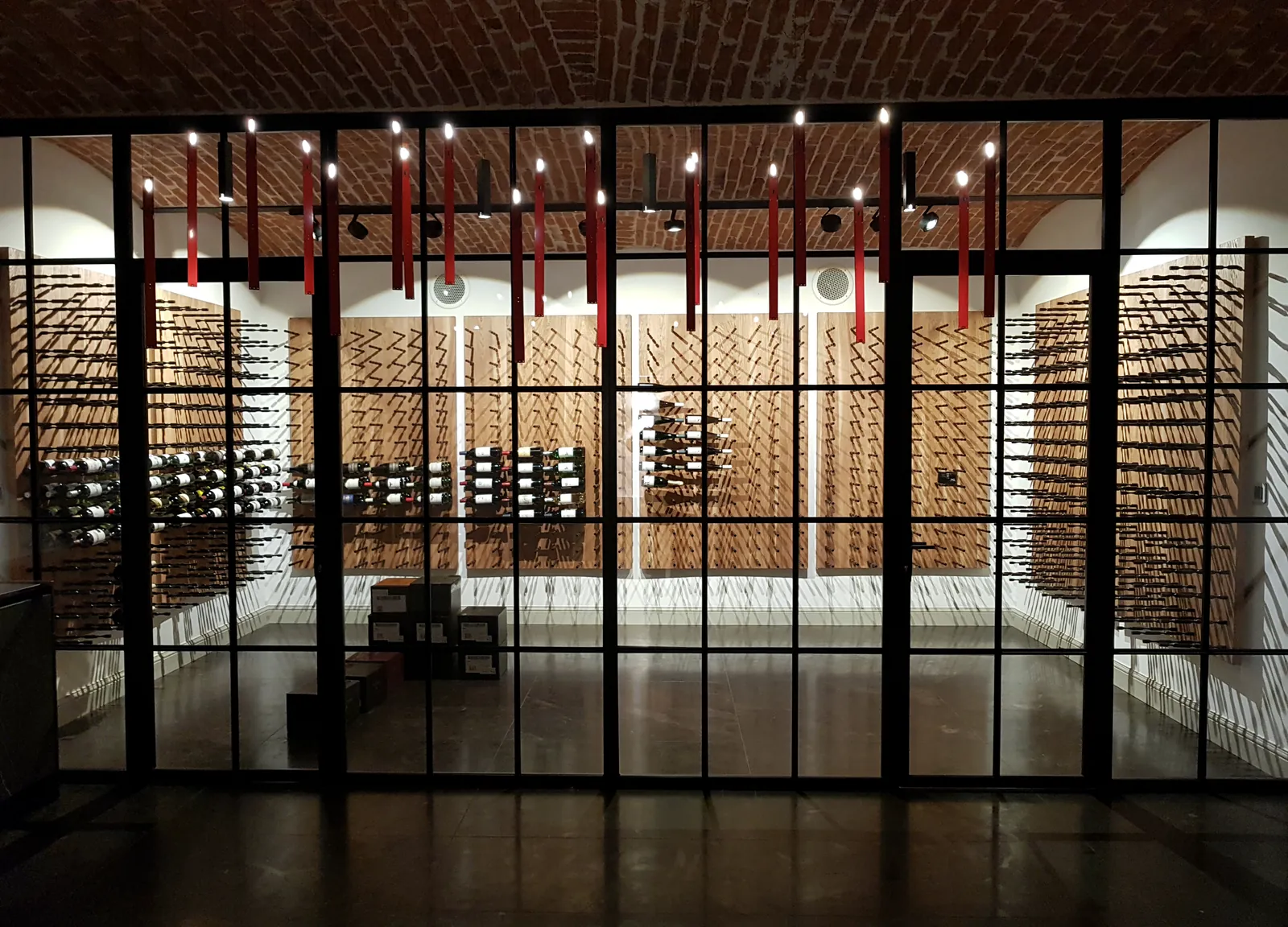
Thermal insulation and construction build-ups
We design the thermal insulation of a wine cellar for the specific building, the adjacent spaces and the operating conditions. The design includes an assessment of heat gains and suitable construction build-ups. We use insulants that do not absorb moisture (for example XPS or perimeter boards); for Wine Master cooling units we work from the thickness table in the manufacturer’s manual. In detail: How to insulate a climate-controlled wine cellar.
02
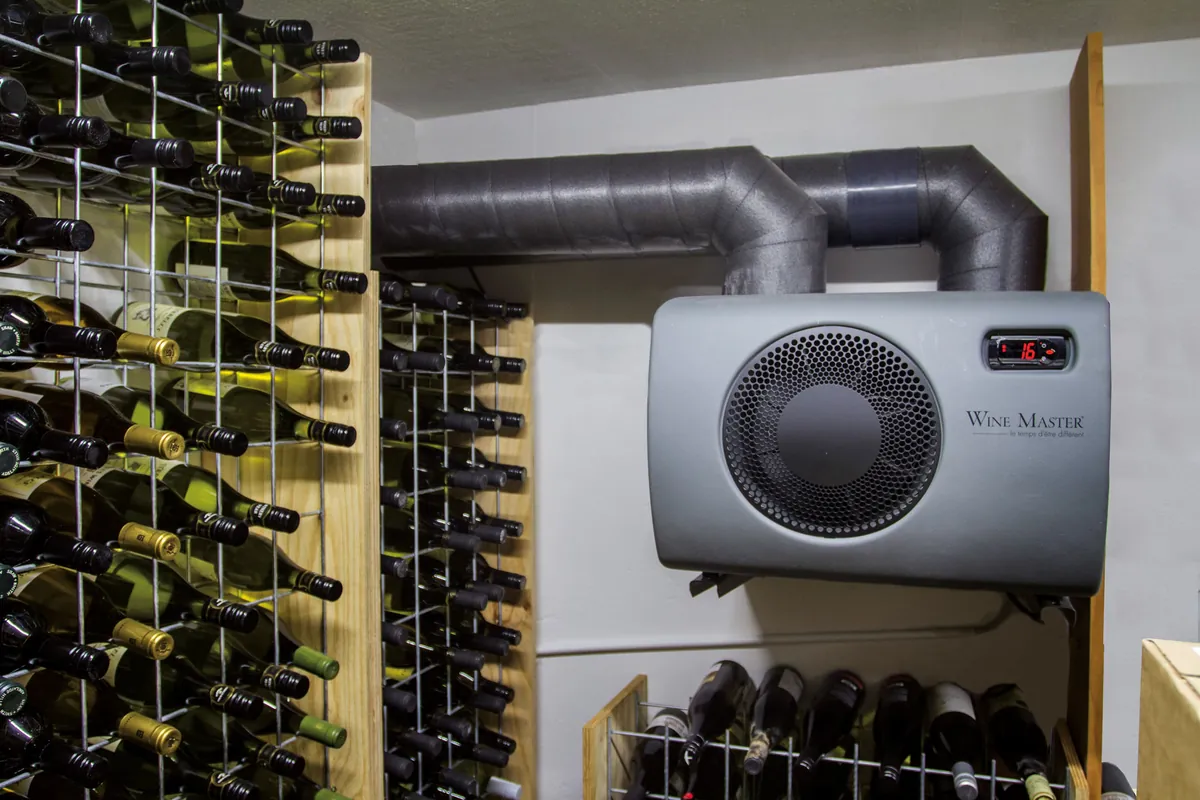
Cooling and heat dissipation
The type of unit mainly determines where the heat goes: into an adjacent ventilated room, ducted outside, or via an outdoor unit. In detail: Wine cellar cooling.
03
Humidity
The cooling unit does not control humidity on its own; stability depends mainly on the insulation and airtightness of the space, or on a separate humidifier or dehumidifier. Recommended values: Wine storage.
04
Condensate
Water is produced during cooling and evaporator defrosting. It is drained through a hose by gravity into a drain, by a pump or into a container; in the ARM15 X display cabinet unit it evaporates. The drain must be accessible for inspection at least once a year.

05
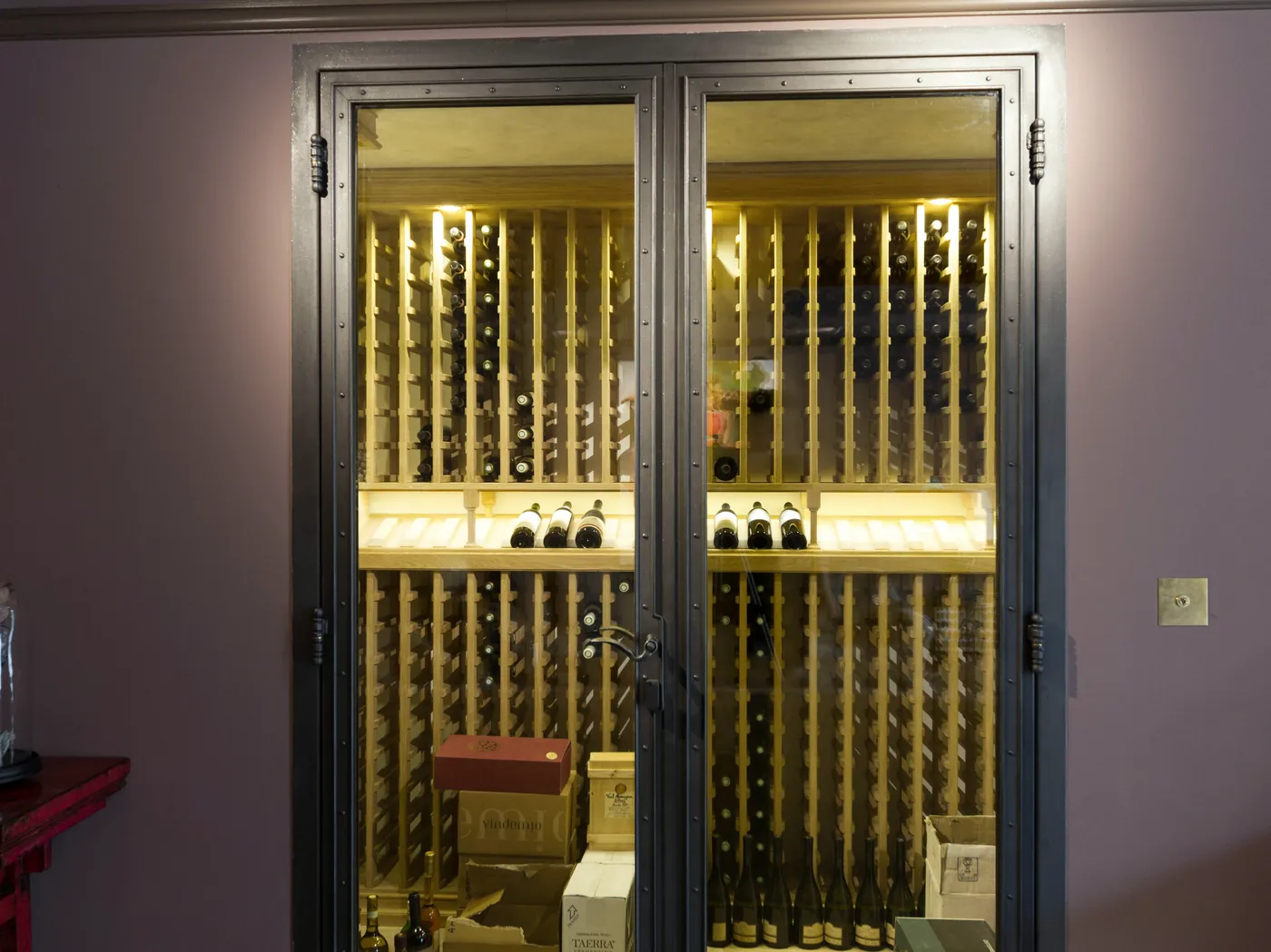
Glazing and lighting
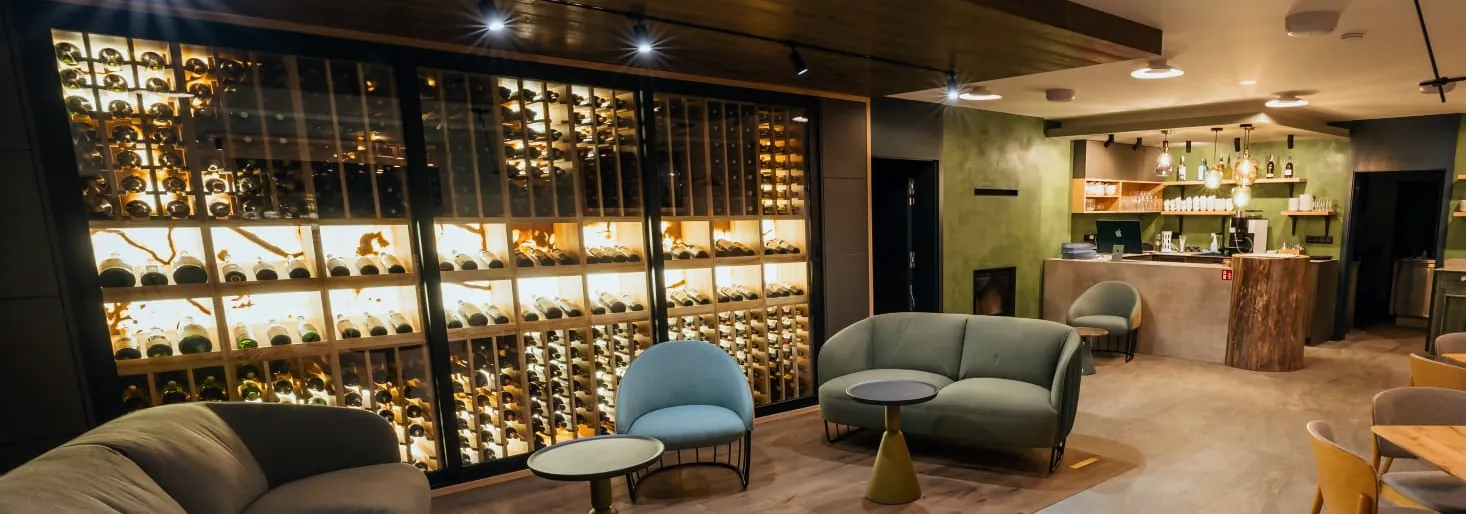
Glass is the weakest point of the thermal envelope and can mist up in a living space. Lighting should be UV-free and produce minimal heat. In detail: Glazed wine walls and Wine cellar fit-out.
Technology
Section through an active cellar.
Stable conditions come from the combination of insulation, cooling capacity and airflow between the racks.
- 01The room’s insulated envelope
- 02Cooling sized to the volume
- 03Air circulation
- 04Racking system
- 05Glazing with steel frames
- 06Condensate drain
07 / Photographs
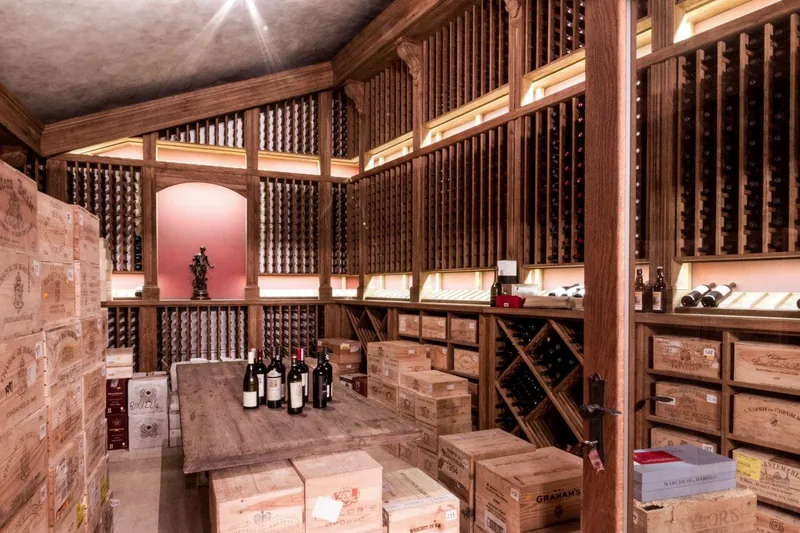
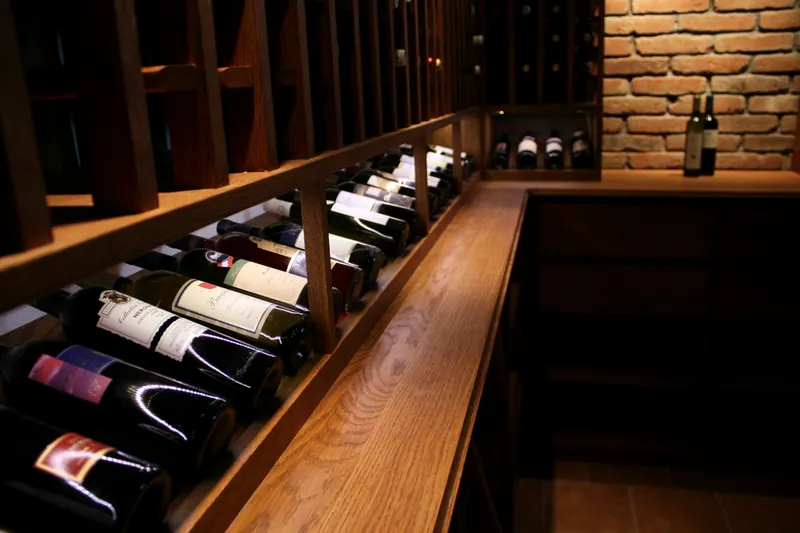
From our projects
08 / Related
Continue
09 / Questions
Frequently asked questions
Which cooling units do you use?
We offer Wine Master cooling units, from compact display cabinet units to split systems for cellars of up to 100 m³. We always derive the specific type from the project and the layout.
Do you deal with condensate drainage?
Yes – by gravity into a drain, by pump or into a container, depending on the model and the building. We design the drain so it can be inspected.
Enquiry
Send us a photograph of your space.
A short description, dimensions or a floor plan is enough for an initial assessment. We usually reply within one working day.